
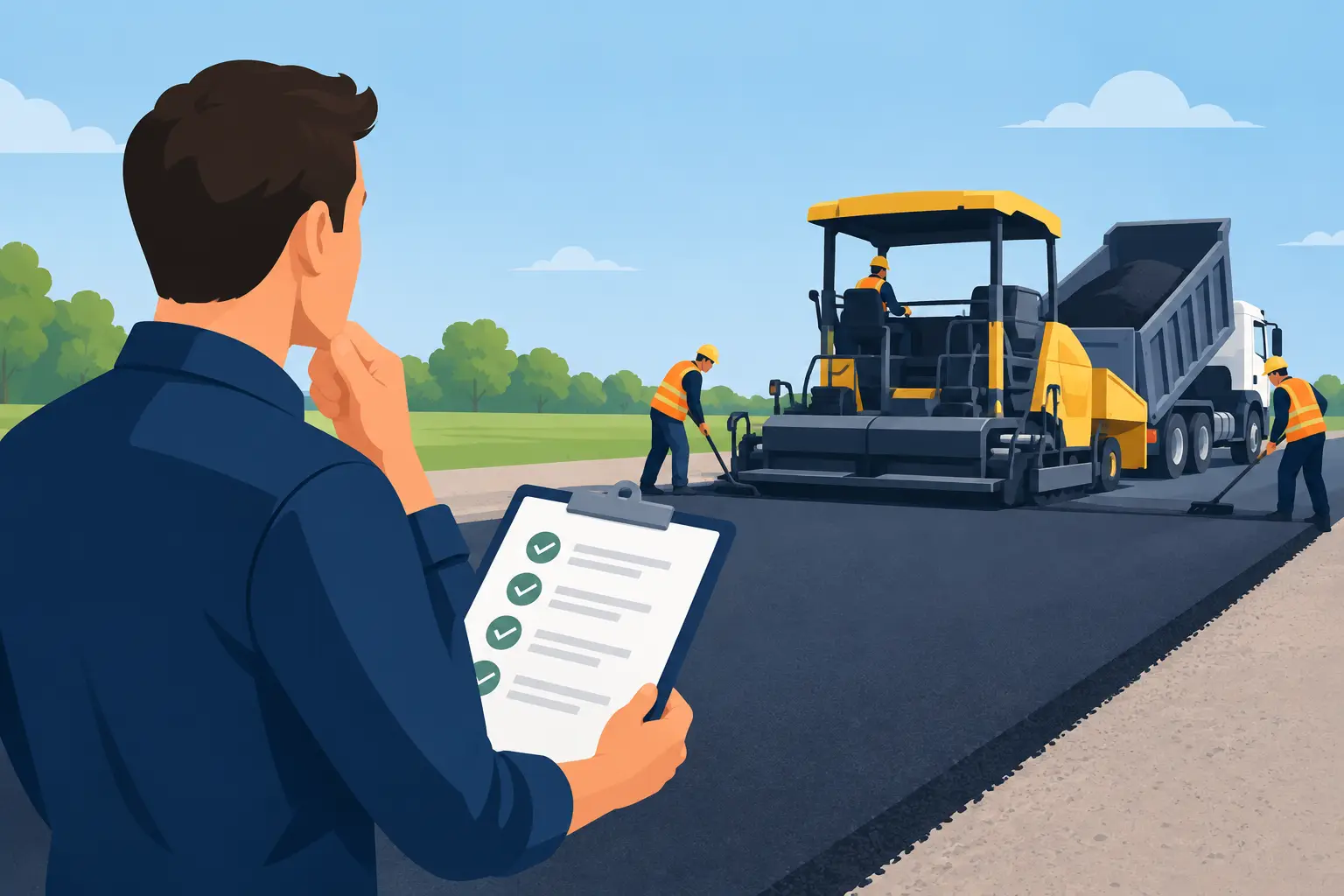
A failing parking lot rarely stays a parking lot problem. Potholes, standing water, faded striping, and rough entrances affect customer access, delivery routes, tenant complaints, trip-and-fall exposure, and the appearance of the entire property. Choosing the best asphalt paving company means selecting a contractor that can protect daily operations as well as the pavement itself.
For commercial property owners and facility teams, the lowest bid is not always the lowest long-term cost. The right contractor understands site conditions, communicates clearly, manages safety, and provides a practical plan for keeping pavement in service after the work is complete.
What the Best Asphalt Paving Company Should Do
A qualified paving contractor should do more than place new asphalt. The company should be able to assess why pavement is failing, recommend the appropriate repair, coordinate work around an active site, and explain what the finished surface needs to perform well.
That starts with scope. Asphalt problems can look similar from the surface, but their causes vary. Cracking may come from age and oxidation, poor drainage, heavy traffic, weak subgrade, or movement below the pavement. A fresh overlay can be appropriate for a structurally sound lot with surface wear. It is not the right answer for widespread base failure, recurring potholes, or water that has nowhere to go.
The best contractor will distinguish between repairs that extend useful life and repairs that simply improve appearance for a short period. That conversation may include patching, milling and overlay, full-depth replacement, drainage corrections, curb work, striping, sealcoating, or a phased maintenance plan.
Start With the Condition of Your Site
Before requesting proposals, define what is happening on the property. You do not need an engineering report to begin, but a clear picture of the site helps contractors build accurate scopes and helps your team compare recommendations.
Walk the property at different times of day if possible. Note areas where vehicles queue, trucks turn, water pools after rain, pedestrians cross traffic lanes, or pavement has begun to unravel. Pay close attention to entrances, loading areas, dumpster pads, fire lanes, and high-traffic parking rows. These are often the places where weak pavement creates operational issues first.
Also consider what is beneath the visible surface. Heavy delivery traffic, repeated dumpster service, and vehicle turning movements can damage pavement faster than ordinary passenger-car parking. A contractor that treats every area of a site the same may miss the need for stronger repairs in these high-stress zones.
Repair, Overlay, or Replacement?
The right solution depends on pavement condition and the property’s plans. Localized full-depth patching can address isolated failures. Milling and overlay can restore a worn surface and improve drainage transitions when the underlying pavement is stable. Full reconstruction costs more upfront but may be the responsible choice where the base has failed or where repairs have become repetitive.
Timing matters, too. If a property is scheduled for redevelopment, a carefully targeted repair may make more sense than a major capital project. If the site will remain in service for years, investing in the foundation and drainage can reduce recurring disruption. A good paving partner explains these trade-offs without pushing every project toward the largest possible scope.
Compare Proposals by Scope, Not Just Price
A paving proposal should make it easy to understand what work is included. If two prices are far apart, the difference is often in the details: asphalt depth, base preparation, removal limits, drainage work, traffic control, striping, cleanup, or warranty terms.
Ask each contractor to identify the repair areas, the planned pavement section, and any assumptions made during pricing. For overlays, clarify whether the proposal includes milling at curbs, drains, door thresholds, and transitions. For replacement work, confirm excavation depth, base material, compaction, and disposal of removed material. For patching, make sure the contractor states whether damaged base will be addressed rather than simply covering failed asphalt.
The proposal should also identify work that is excluded. This is not a warning sign by itself. Existing underground conditions, unexpected subgrade failures, or unmarked utilities can require adjustments once work begins. What matters is whether the contractor explains how those conditions will be documented, priced, and approved.
A vague quote can look convenient until the site is under construction. A detailed scope creates fewer surprises for the property manager, contractor, tenants, and accounting team.
Evaluate Safety and Site Coordination
Commercial paving happens around people, vehicles, deliveries, and business hours. The best asphalt paving company treats site coordination as part of the work, not as an afterthought.
Ask how the contractor will manage access during construction. A clear plan should address entrances and exits, pedestrian routes, delivery windows, emergency access, work-zone barriers, staging areas, and communication with on-site contacts. For multi-tenant properties, the sequencing plan may be as important as the paving plan. Closing a lot in sections can keep businesses operating, though it may take longer than shutting down the entire site.
Safety practices should be visible in the contractor’s process. Crew training, appropriate traffic control, equipment awareness, and documented jobsite procedures all matter. Pavement work involves heavy equipment, hot materials, changing traffic patterns, and active pedestrians. Reliable contractors plan for those conditions before the crew arrives.
Scheduling deserves the same attention. Night or weekend work can reduce disruption for retail and office properties, but it may increase labor costs or create noise concerns. Industrial facilities may need work planned around shift changes and shipping schedules. There is no universal best schedule. There is a best schedule for the site, and the contractor should help build it.
Look for Quality Control You Can Verify
New asphalt can appear smooth on day one even when important steps were skipped. Long-term performance depends on preparation, material placement, compaction, drainage, and finishing details.
Ask how the company handles surface preparation and compaction. Proper cleaning, tack application where needed, stable edges, and correctly compacted asphalt help sections bond and hold up under traffic. Water should move toward intended drainage points rather than collect along curbs, in low areas, or near building entrances.
Do not overlook the final site details. Striping should support traffic flow and accessibility requirements. Catch basins, utility structures, wheel stops, signage, and curbs need to be considered in the scope. Clean transitions matter at sidewalks and entrances, where uneven elevations can become a safety concern.
Project photos and relevant commercial references can help confirm that a contractor regularly performs work similar to yours. A company experienced with small residential driveways may still be capable, but a busy retail center, distribution facility, or multi-property portfolio requires a different level of scheduling, communication, and site management.
Choose a Partner for the Pavement’s Full Life Cycle
Asphalt is a managed asset. Once a project is complete, the next goal is to keep water out, repair small failures early, maintain markings, and plan capital work before the site reaches an emergency condition.
Preventive maintenance does not eliminate eventual replacement, but it can improve budgeting and help pavement last longer. Crack sealing, targeted repairs, sealcoating where appropriate, drainage attention, and regular condition reviews allow property teams to make decisions before potholes and liability concerns force an urgent response.
This matters even more for organizations managing multiple locations across different markets. A contractor with regional coverage can provide consistency in reporting, account communication, and maintenance planning while still accounting for local weather, traffic patterns, and site needs. Blacktop Joe approaches paving and exterior site care as an ongoing responsibility, helping facility teams move from reactive repairs to planned pavement care.
Questions Worth Asking Before You Award the Work
Before making a final decision, ask who will manage the project, how change conditions will be handled, what access plan will be used, and what communication your on-site team can expect. Confirm the expected schedule, curing or reopening guidance, cleanup responsibilities, and any follow-up inspection process.
You should also ask what the contractor recommends after the work is complete. A useful answer is specific to the property. It should address inspection timing, crack repair, drainage watch points, sealcoating intervals when suitable, and likely future repair areas. “Call us when it breaks” is not a maintenance strategy.
The best choice is usually the contractor that makes the work easier to understand before it starts and easier to manage after the crew leaves. Give that partner a clear view of your site, your operating constraints, and your long-term plans, and expect the same clarity in return.