
Care On A Cycle.
Not On A Crisis.
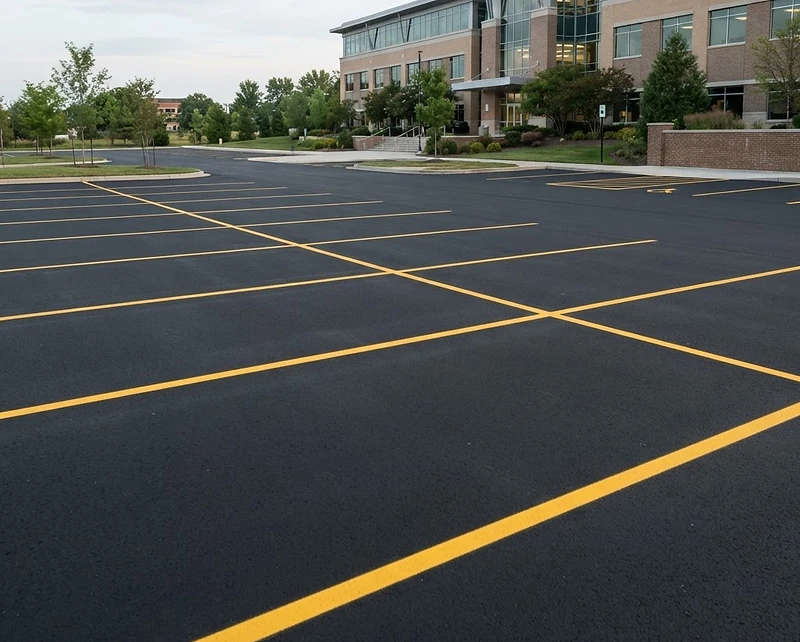
Long-term asphalt care is scheduled work, not emergency work. A maintained lot runs on fixed intervals — sealcoating every 4 years, hot pour crack filling every 4 years with an inspection each year, and line striping every 2 years — all of it specified for freeze-thaw.
Three Cycles Hold
The Program Together.
Sealcoating
The wearing coat. It takes the sun, the salt, the oil drips and the plow blades instead of the asphalt underneath.
- Lot cleaned, blown and crack-filled before any sealer goes down
- Commercial-grade coal tar or asphalt emulsion, applied at rate
- Strengthening additives for a harder, longer-wearing film
- Traffic closed 24–48 hours until the coat cures
Hot Pour Crack Filling
Cracks are how water gets under the pavement. Filled on schedule, they stop being the start of a pothole.
- Inspected every year, with new cracks filled as they appear
- Cracks routed open and blown clean before sealing
- 400°F rubberized hot pour sealant, not cold-pour cans
- Stays flexible through the freeze-thaw cycle
Line Striping & Layout
Stalls, arrows, crosswalks and no-park hatching that stay legible through a hard winter and keep the lot compliant.
- ADA stalls, access aisles and signage laid out to code
- Fire lanes and no-park zones hatched and refreshed
- Traffic-grade paint on a cleaned, dry, cured surface
- Layout measured and chalked, not eyeballed
Those are the intervals a sound commercial lot runs on. Pavement condition, traffic volume, drainage and how hard the winter hits all move them, so the free site evaluation sets the cycle your lot actually needs.
How The Year
Runs On Your Lot.
Spring
Post-winter walk. Potholes, plow damage and any new cracks get patched in DOT-approved hot mix as the lot dries out.
Summer
The heavy work. Cracks routed and filled, then the sealcoat goes down and cures. Warm, dry weather is the window for it.
Fall
Restriping once the sealcoat has cured, plus a last crack pass so water isn't sitting in an open crack when it freezes.
Winter Is For Watching
Sealcoat, crack sealant and paint all need warm, dry pavement to go down right. Work scheduled outside that window is work that fails early, so we plan the program around the season instead of forcing it.
Scheduled Around Your Hours
Phased or overnight work keeps the lot in service while we're on it. Barricades and traffic control are planned with your team before anything moves, so tenants and deliveries keep getting in.
Put Your Lot On A Cycle.
Request a free site evaluation and we'll set the maintenance intervals your pavement actually needs — quoted as one program or line by line.